Interview with Seon Shim, writer, producer, and director of the Documentary Short ‘The Cat that Lives in Your Dreams’
Hi Seon! ‘The Cat that Lives in Your Dreams’ has been recently named a Finalist in the category Best Documentary Short at the New York International Film Awards. Could you tell us more about this project?
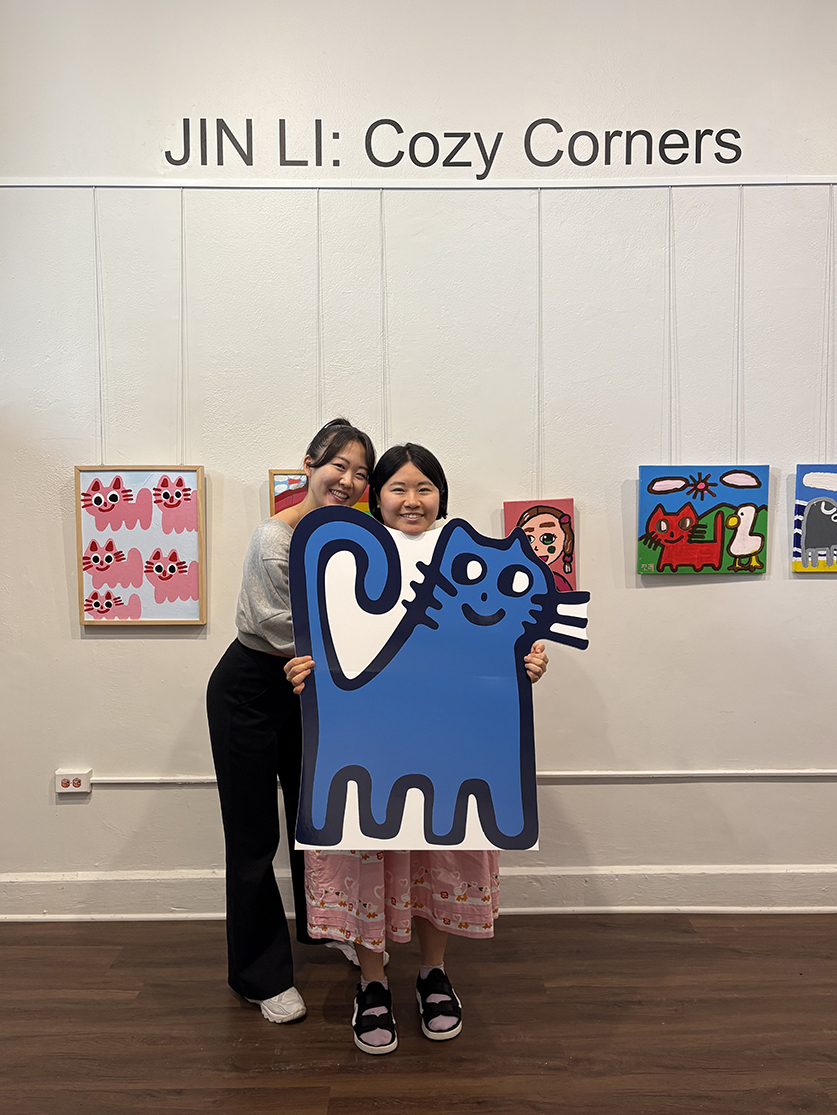
Thank you so much! “The Cat That Lives in Your Dreams” is a short documentary that follows Jin Li, a 29-year-old autistic artist from Seoul, as she travels to New York for her first solo exhibition. I invited Jin Li and, with advice from my supervisor Professor Faye Ginsburg, helped arrange for her to work with several art spaces. As the director, I wanted to create a film that centers her creative process and lets her personality, routines, and artwork take the lead—without imposing too much structure from my side.
Tell us a bit about your background. When did you decide you wanted to work in the film industry?
I was born and raised in Korea, and my family’s history—shaped by stories of displacement—has always influenced my interest in storytelling and community. My first step toward filmmaking came while studying anthropology, when I realized film could help bridge experiences and build understanding across cultures. Later, moving to New York for graduate school, and now starting a PhD in Vancouver, I’ve focused more on disability arts and making media that is collaborative and ethical.
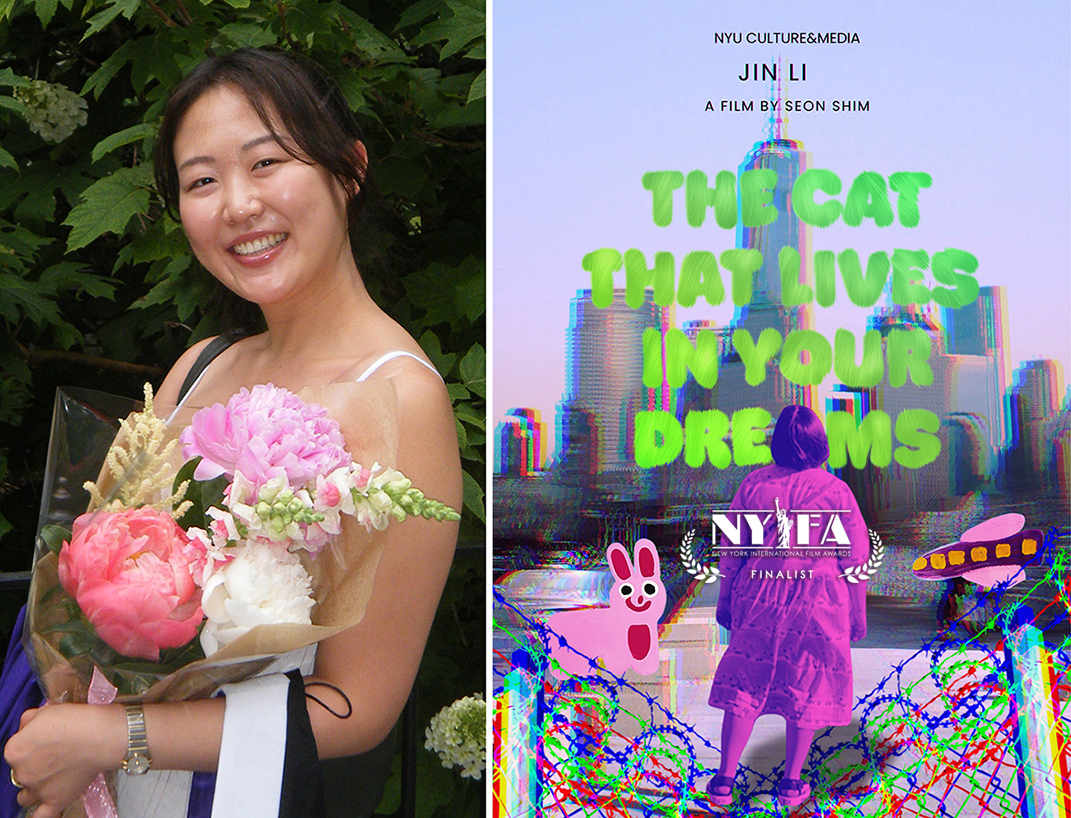
The filmmaker Seon Shim and the official poster of ‘The Cat that Lives in Your Dreams’
What did you enjoy the most about working on this documentary? What did you find most challenging?
The best part was joining disability art communities—both in Seoul and New York—and experiencing the everyday creativity and mutual care that surrounded Jin Li. It was inspiring to see how art-making could bring people together. The hardest part was actually deciding what to leave out. There were so many memorable conversations and moments with mentors and artists; I had to make tough choices to fit the film’s short length and keep the spotlight on Jin Li’s own story.
Do you have any on set stories you would like to share?
Definitely! One thing that always stands out is Jin Li’s rapport with the camera. Sometimes, she’d arrange her dolls before going to bed or direct her sister behind the camera to move the camera (“stand up, stand up!”)—little gestures that showed how aware and playful she was about being filmed. It wasn’t just observation; she actively shaped how she wanted to be seen, turning the filming into a kind of collaboration. Off camera, she was incredibly warm and caring, which made those moments feel all the more genuine.
What keeps you inspired to continue working as a filmmaker?
It’s the people I meet and the relationships I build—each project brings together new voices and perspectives. I’m inspired by how collaborations change the direction and feeling of a film, and by the challenge of representing stories in ways that feel true and respectful.
Do you have a dream project or someone you would like to work with one day?
I’d love to work with filmmakers like Tracey Moffatt or Alanis Obomsawin. Both create work that is formally inventive and deeply rooted in community—qualities I really admire and aspire to in my own practice.
What is the message that ‘The Cat that Lives in Your Dreams’ conveys?
I hope the film encourages viewers to look beyond labels. Jin Li isn’t just “an autistic artist”—she’s a Korean woman with her own interests, style, and ways of seeing the world. The title is open to interpretation, and instead of explaining her artistic decisions, I want people to consider the assumptions they bring about disability or creativity, and meet her work on her own terms.
What’s next for you? What are you working on right now?
Right now I’m focused on my PhD research, collaborating with disability arts communities and thinking about more participatory approaches to film. I’m also working on a science fiction project that blends imagination, social critique, and accessible filmmaking—so I’m excited to see where that leads.
Connecting to Seon Shim: