VIP Interview with Lenka Lenucheva, writer and director of the Short Documentary ‘Kalinovskiy’
Today, we introduce Lenka Lenucheva: dancer, filmmaker, and the director and editor of the short documentary Kalinovskiy. In this interview, we talk about Lenucheva’s background, how observing brought her to directing and the magic behind unplanned moments. Enjoy!
Could you tell us more about your background? What led you to filmmaking?
I come from dance – I’m a choreographer. For years, I thought my place was on stage, performing. But I always felt more like an observer than a performer. I was drawn to the quiet moments, the unspoken stories happening on the sidelines. Documentary filmmaking became a natural extension of that. As a choreographer, I think in space, body, and rhythm – and that directly shapes how I frame a shot or build a scene. I just swapped the stage for a camera. Now, instead of creating movement, I capture the movement of life around me. For me, directing is the most honest way to be both an artist and an observer.
What was the most challenging aspect of your first film, and how did you overcome it?
The most challenging aspect of making my first film was the lack of a clear plan and technical specifications, which initially frightened me. However, I eventually realized that this way of working actually suits me best – having the freedom to step beyond boundaries and let the moment unfold naturally.
What is the story behind the title? And why did you choose this story specifically?
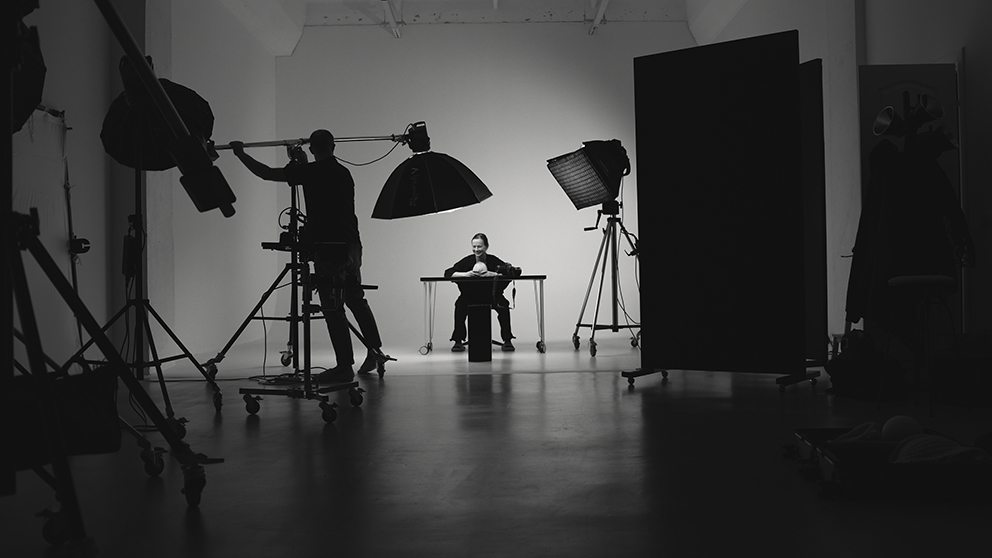
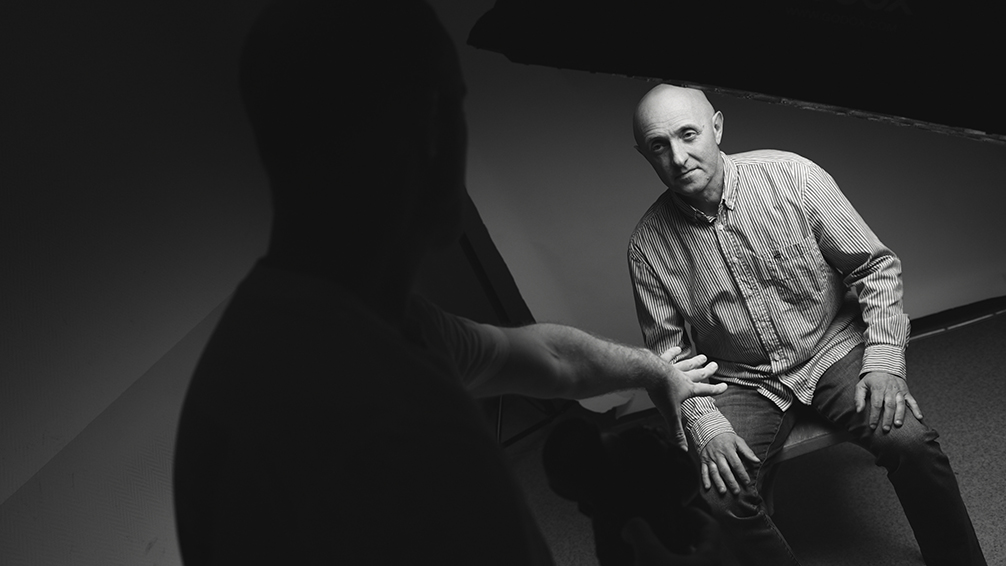
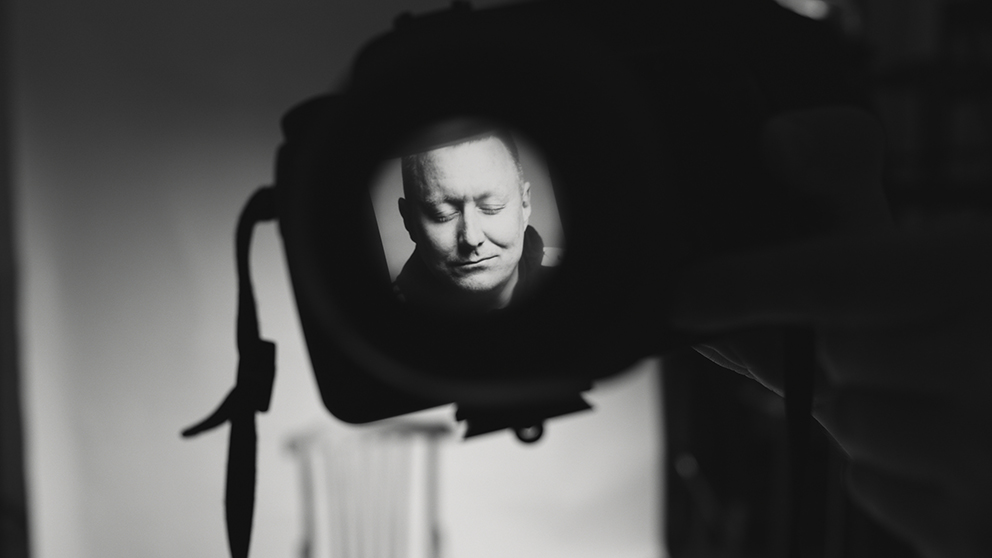
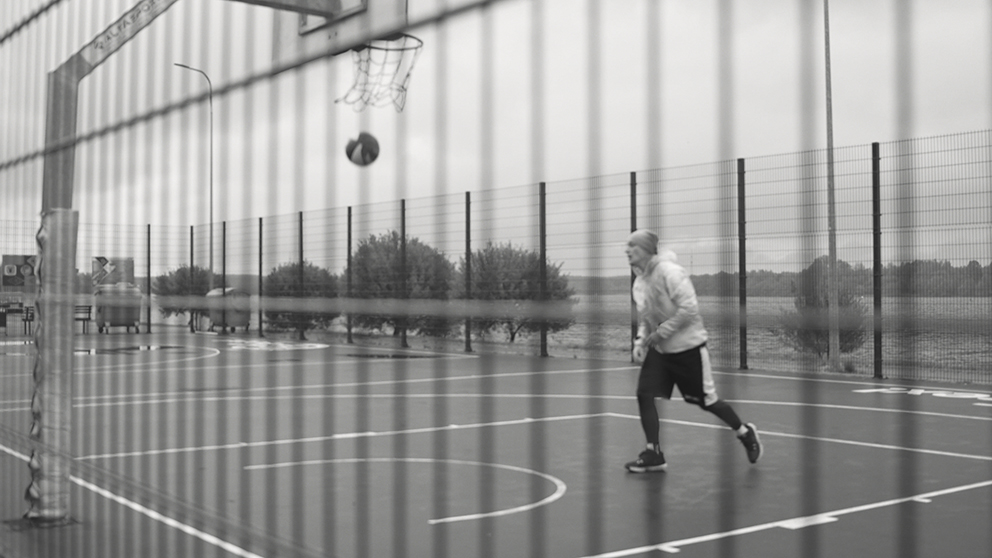
Honestly? I didn’t choose this story – the story chose me. The film is a psychological portrait of a man who has dedicated many years to photography. Roma Kalinovskiy is shown in his natural habitat: in his photo studio, working on a social project at a rehabilitation center, and simply as an ordinary person without a camera. That’s why the film has a second title: LIFE. HUMAN. PHOTOGRAPHY.
We really enjoyed the black-and-white cinematography. Why did you choose this visual style?
Roma, the main character of my film, only shoots portraits in black and white. He’s been doing it for years – it’s his signature. So, it felt natural that the film itself should live in the same visual world as his photographs. I wanted the frames of the movie to blend with the portraits he takes during the filming. Black and white creates a dialogue between his art and mine. And of course – black and white just gives the material more depth. More cinematic weight. It strips away distraction and leaves only the person. And at the end of the day, this film is about a person.
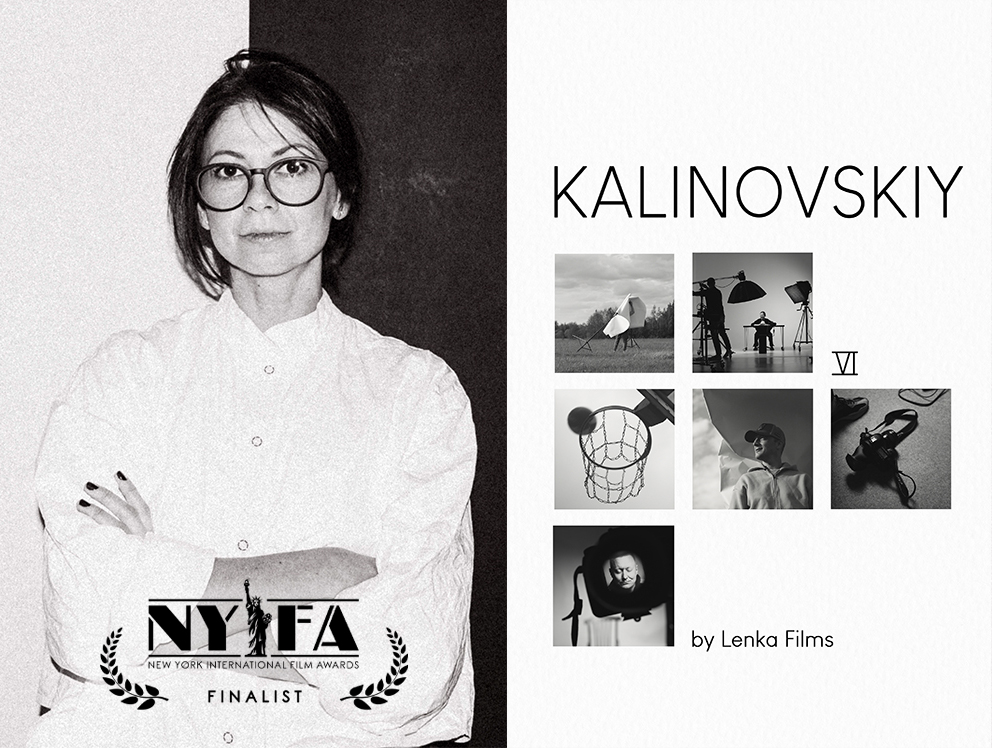
The director Lenka Lenucheva and the official poster of ‘Kalinovskiy’
You play the drums, an instrument that is heavily featured in the film’s soundtrack – perhaps even as a central character. Did you compose the soundtrack? And did the music influence the images or was it the other way around?
I play drums a little. But more importantly, I used to be a tap dancer. And tap dancers are hybrids – we’re dancers, but also musicians. Our feet become instruments. So, rhythm has always lived in my body. In editing, music guides me. I always know when I’ve found the right track – the image suddenly starts breathing. So yes, the drums are almost a character. They’re the pulse. And even though I didn’t write the music, I chose every beat. The images followed the rhythm, not the other way around.
At the end of the film, the photographer’s backdrop breaks after ten years of use. What does this moment symbolize?
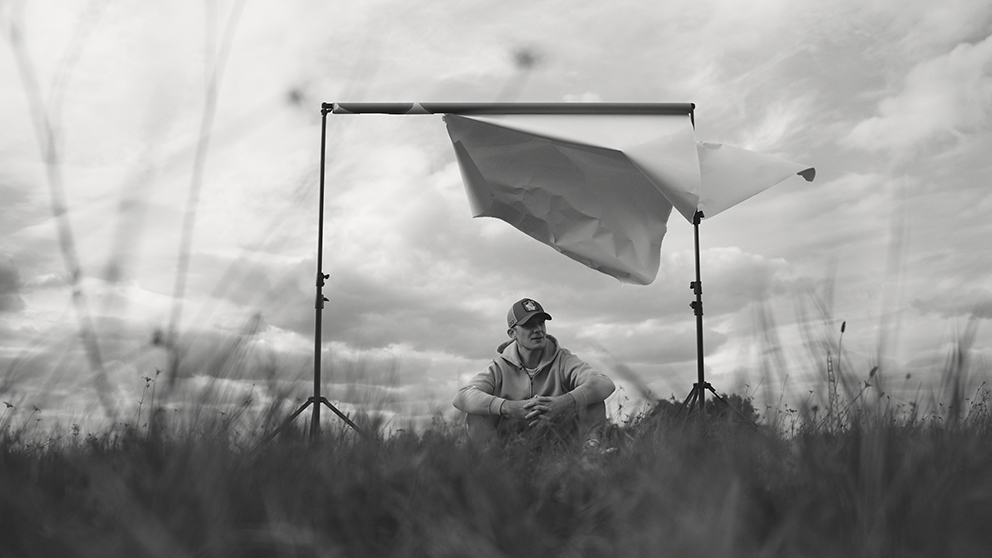
That moment wasn’t planned. We were shooting an interview in an open field, and it was incredibly windy. The backdrop had been with him for ten years – he mentions it in the beginning of the film. And then, right in front of the camera, it just tore. For me, that’s what documentary filmmaking is about. You can’t script life. You can’t storyboard reality. You prepare, you set up, and then you let go. You let the wind come. That torn backdrop became a symbol of impermanence. Ten years of work, ten years of portraits -and then a gust of wind changes everything. It’s fragile. But it’s also real. And that unplanned moment ended up saying more than anything we could have written.
You chose to divide your film into chapters. Other directors, such as Joachim Trier (The Worst Person in the World, Sentimental Value), as well as Lars von Trier and Quentin Tarantino, have used a similar structure. What inspired this choice?
Honestly? I stole it. Right before shooting, I watched the series Transatlantic and fell in love with those Roman numerals and drumbeats. They created this rhythm, this heartbeat for the story. I know first-time directors are supposed to pretend they invent everything. But borrowing is normal. It’s how we learn. Tarantino built a career on it. So yes, I borrowed the structure. My film has six parts, each opened by a Roman numeral and a drum. That drum is the pulse – a reminder that life keeps beating even when the story pauses. The form isn’t mine. But the heartbeat inside? That’s all mine.
Who are some of your biggest influences as a director, and how have they shaped your style?
My taste in cinema is constantly evolving. But one thing has always stayed the same: I love films with an aftertaste. Movies that don’t end when the credits roll – that leave something inside you, something to digest. But since I started making films myself, I watch movies differently now. I can’t just disappear into them anymore. I find myself paying attention to the techniques, asking: why did they put the camera there? Why that cut? It’s like seeing the strings behind the magic. As for specific directors who shaped me? I’m not sure I have one answer. Maybe my biggest influence wasn’t a person, but the feeling a film leaves behind. That aftertaste. That’s what I chase in my own work.
What’s the best piece of advice you would give to a young filmmaker?
I still consider myself a young filmmaker. I first picked up a camera only four years ago. I’m still learning, still figuring things out. But if I had to say something to everyone who’s just starting, who’s experimenting – here it is: Don’t be afraid to experiment. Trust your inner compass. And never give up.
Looking ahead, what kinds of stories or genres would you like to explore? What do you hope to achieve in the coming years?
I’m completely in love with documentary filmmaking. It’s where my heart is, and I really want to continue in this direction. But like many filmmakers, I face the same challenge: projects for the soul don’t always pay the bills. So for now, I balance my artistic work with commercial projects. It’s a reality I’ve accepted – but not one I’m settling for. What I hope for in the coming years is simple: to find a balance. To keep telling the stories that matter to me, while also building financial independence. I don’t think art and money have to be enemies. I just want to keep making documentaries – and make a living doing it.
Follow Lenka Lenucheva and her projects on: